What are Kampo medicines?
Kampo medicines are herbal drugs made from natural ingredients of plant, animal, and mineral origin that are prepared according to classical Kampo theories. Kampo uses many familiar materials as medicinal ingredients; for example, "Keihi", commonly known as cinnamon, and "Borei", which is oyster shell. Several natural ingredients are mixed according to traditional formulae to draw out a synergistic effect from each other. In Japan today, Kampo drugs for medical use are prescribed by licensed medical doctors while some are available at pharmacies and drug stores without prescriptions.
History of Kampo in Japan
Kampo originally came to Japan from China in the fifth to sixth century. Based upon this traditional Chinese medicine, Japan has developed and systematized its own unique medicine through a long empirical tradition of study.
The name "Kampo" first came into use in the latter half of the sixteenth century to distinguish traditional medicine from newly acquired western medicine. Kampo means the medicine transmitted from Kan (the Chinese Han dynasty), while western medicine was called Rampo (medicine from Holland). Kampo was the mainstream of Japanese medicine at that time.
In the latter half of the nineteenth Century, Japan's government developed a new medical system centering on western medicine. As a result, Kampo fell into decline and it disappeared from center stage and was all but forgotten for a period of time. Nevertheless, its tradition survived and eventually interest in Kampo was renewed. Though there had been great advances in western medicine it was not a panacea for all illness and accordingly Kampo gained popularity as an effective complementary and alternative medicine. In 1967 Kampo extract medicines were included under public insurance coverage for the first time in Japan, triggering new progress in Kampo and its application in the framework of modern medicine. Since then Kampo medicines have become widely used for clinical therapies. Today they are not only used in primary care for common colds and other minor ailments but also as cutting-edge medicines for cancers, etc.
Production of Kampo
Traditionally, Kampo medicines are prepared by blending cut natural herbs and boiling them in water to infuse them. The resulting decoctions have distinct tastes and flavors. Today in Japan the traditional method of preparation is still practiced, but more widely used are ready-to-take Kampo extract granules or tablets produced from herbal extracts in pharmaceutical factories.
The production system for these Kampo medicines is supported by techniques of the highest level in the world, enabling stable supply of quality Kampo medicines with high concentrations of herbal extracts, while precisely following the authentic recipes in classical prescriptions.
Today Kampo medicines are available in a wide range of formulations such as fine granules, powders, tablets, capsules, and solutions, just like modern western medicines. These extract medicines, unlike old-style Kampo crude herb mixtures, are easy to carry around, can be taken anytime anywhere, and have a good shelf life.
Kampo now used together with western medicine
Western medicine focuses on individual organs or parts of the body. It seeks to target the sick parts of the body to identify and remove the cause of a sickness. The effect is direct and sharp. Today many diseases have become curable with this style of medicine and new discoveries continue to be made. Yet as powerful as western medicine is, it is not versatile enough to cure all types of sickness and there are limits to what it alone can do. Additionally, western medicine is known to produce many adverse side effects and sometimes cannot give patients relief when the exact source of a symptom cannot be identified.
In contrast, Kampo employs a symptom-oriented, holistic approach. It does not just focus on the condition of diseased parts but checks the condition of the entire body and mind. Then it seeks to produce a proper balance of all organ systems to recover health in patients. The effect is weaker and slower compared to western medicine, but Kampo is better in alleviating the symptoms suffered by patients. Accordingly, Kampo has attained a high level of patient satisfaction.
In Japan today, based on a deepened understanding of their respective strengths, western medicine and Kampo are being used together in clinical treatment, where the most effective ways to combine their advantages are being explored. This "combination" therapy has contributed to enhanced patient quality of life.
Kampo medicines have taken firm root in Japan and currently more than eighty percent of doctors prescribe Kampo medicines, which are also widely available at pharmacies and drugstores.
Kampo for further development of medicine
In Japan, Kampo medicines both for clinical use and over-the-counter sales are contributing to public health and are expected to evolve even further. Currently, Japan is the only country where clinical doctors are permitted to prescribe both western types of medicines and Kampo medicines at the same time and where both are covered by the same public insurance system. Therefore the application of Kampo medicines and their contribution to clinical treatments in Japan are very worthy of attention, to fully appreciate the great future potential of Kampo for opening a new path for modern medicine.
Showing posts with label public. Show all posts
Showing posts with label public. Show all posts
Saturday, February 1, 2014

Sunday, January 12, 2014
Olympics Medal 1964
Medals were designed by. Mr. Yusaku Kamekura. On the reverse side of the medals are the letters of "XVIII OLYMPIAD TOKYO 1964" with the game designation in English of each of the 20 sports (e.g. ATHLETICS).


Medals were of 60 mm in diameter and 3 mm thick. The gold medal is a pure silver mould strongly gilded with 6 grams of fine gold, the silver medal is made of pure silver, and the bronze medal is of bronze. The medals were provided with a ring plated with gold, silver or copper respectively, and a coloured box coated with Japanese black lacquer.
The medals were cast at the Japanese Mint. Some of the surplus medals were presented to public museums and for exhibition purposes, while the remainder were melted down.
Tokyo will be the host country for the 2020 Olympics. Also, the Former Japanese Prime Minister Yoshiro Mori has accepted a request to become head of the Tokyo 2020 Summer Olympic organizing committee.
 |
| Tokyo 2020 Candidate City Poster. |
Tuesday, December 31, 2013
Ōmisoka- Second-most important day in Japanese tradition.
New Year's Eve in Japan is observed by settling financial accounts (kake ), eating a special noodle dish known as okake, which is hot soup over noodles, and taking a hot bath followed by a well-earned rest. Widely celebrated on December 31, Omisoka marks the end of the preparations for New Year's celebrations, which go on for the next three days. It is a popular time for visitors to drop in to exchange New Year's greetings over cups of hot sake and decorated mochi cakes.

The city of Ashikaga, 50 miles north of Tokyo, is the site of the 1,200-year-old Saishoji temple, headquarters for the Akutai Matsuri, the "naughty festival," or "festival of abusive language." On New Year's Eve there, participants walk (or take a bus) up a dark mountain road led by a man blowing a horagai, a shell that is supposed to fend off bad tidings. Some carry lanterns and wear cardboard hats bearing the picture of Bishamonten, one of the seven gods of fortune in Japanese Buddhism. The Saishoji temple was built in honor of this god.


The festival originated more than 200 years ago so repressed workers could let off steam; therefore, this is not simply a midnight stroll. Those hiking toward the temple atop the 1,000-foot-high hill scream curses into the night. They curse politicians, teachers, bad grades, low pay, and any other complaints of modern daily life in Japan. They release pent-up frustrations with words they ordinarily would not say directly to anyone. Bakayaro is one of the words most frequently heard. It means, roughly, "you idiot."
After the 40-minute walk the crowd storms into the temple, the bell is rung, prayers are offered, and the cursing continues. But when the new year arrives at midnight, the curses end and more typical celebration begins. Then the celebrants turn to another unique ceremony: when the priest calls the name of each worshipper, the individual kneels with a wide red lacquer bowl at his or her lips. Sake is then poured onto the person's forehead, runs across his or her face, into the bowl and is consumed. All this occurs while the priest reads the worshipper's personal wishes for the new year to the pounding of a taiko drum. This ceremony is supposed to ensure that happiness will flow in the new year.

On Omisoka, people wearing kimonos fill the streets as they go to visit shrines. But millions watch the "Red and White Song Contest" on TV. This marathon song festival, first organized in 1950, has become an indispensable ritual of the New Year. The show, lasting up to four hours, usually has 50 performers, 25 on each team. The Red team is comprised of women, the White team men. When the performances are over, the audience and a panel of judges decide which team won. Typical past performances include an orchestra playing Mozart and a group singing Okinawan folk music; a bit less typical was a female singer in a gown of feathers that made her look like a bird; as she finished her song she flapped her arms and flew away, suspended by a wire.
The TV show ends shortly before midnight in time for an older tradition: the tolling of the great bells in Buddhist temples at midnight. Priests strike the bells 108 times, a reminder of the 108 human frailties or sins in Buddhist belief. By the end of the 108 strokes of the bell, the impure desires of the old year have been driven away.
An ancient folk ritual of a very different sort is observed on the Oga Peninsula, Akita Prefecture, on New Year's Eve. Young men play the part of hairy devils called Namahage, dressing in grotesque red and blue masks and straw cloaks. They stomp through the streets shouting, "Any wicked people about?" and then pound on people's doorways, the idea being to frighten children and newly married women so that they won't be lazy. After being admitted to a home, they sit down for rice cakes, first scaring the wits out of children with stories of what will happen to them if they are naughty.

The city of Ashikaga, 50 miles north of Tokyo, is the site of the 1,200-year-old Saishoji temple, headquarters for the Akutai Matsuri, the "naughty festival," or "festival of abusive language." On New Year's Eve there, participants walk (or take a bus) up a dark mountain road led by a man blowing a horagai, a shell that is supposed to fend off bad tidings. Some carry lanterns and wear cardboard hats bearing the picture of Bishamonten, one of the seven gods of fortune in Japanese Buddhism. The Saishoji temple was built in honor of this god.


The festival originated more than 200 years ago so repressed workers could let off steam; therefore, this is not simply a midnight stroll. Those hiking toward the temple atop the 1,000-foot-high hill scream curses into the night. They curse politicians, teachers, bad grades, low pay, and any other complaints of modern daily life in Japan. They release pent-up frustrations with words they ordinarily would not say directly to anyone. Bakayaro is one of the words most frequently heard. It means, roughly, "you idiot."
After the 40-minute walk the crowd storms into the temple, the bell is rung, prayers are offered, and the cursing continues. But when the new year arrives at midnight, the curses end and more typical celebration begins. Then the celebrants turn to another unique ceremony: when the priest calls the name of each worshipper, the individual kneels with a wide red lacquer bowl at his or her lips. Sake is then poured onto the person's forehead, runs across his or her face, into the bowl and is consumed. All this occurs while the priest reads the worshipper's personal wishes for the new year to the pounding of a taiko drum. This ceremony is supposed to ensure that happiness will flow in the new year.

On Omisoka, people wearing kimonos fill the streets as they go to visit shrines. But millions watch the "Red and White Song Contest" on TV. This marathon song festival, first organized in 1950, has become an indispensable ritual of the New Year. The show, lasting up to four hours, usually has 50 performers, 25 on each team. The Red team is comprised of women, the White team men. When the performances are over, the audience and a panel of judges decide which team won. Typical past performances include an orchestra playing Mozart and a group singing Okinawan folk music; a bit less typical was a female singer in a gown of feathers that made her look like a bird; as she finished her song she flapped her arms and flew away, suspended by a wire.
The TV show ends shortly before midnight in time for an older tradition: the tolling of the great bells in Buddhist temples at midnight. Priests strike the bells 108 times, a reminder of the 108 human frailties or sins in Buddhist belief. By the end of the 108 strokes of the bell, the impure desires of the old year have been driven away.
An ancient folk ritual of a very different sort is observed on the Oga Peninsula, Akita Prefecture, on New Year's Eve. Young men play the part of hairy devils called Namahage, dressing in grotesque red and blue masks and straw cloaks. They stomp through the streets shouting, "Any wicked people about?" and then pound on people's doorways, the idea being to frighten children and newly married women so that they won't be lazy. After being admitted to a home, they sit down for rice cakes, first scaring the wits out of children with stories of what will happen to them if they are naughty.
Monday, December 30, 2013
Love Doujinshi? - It's COMIKET 2013!
Comiket actually started back in 1975 (the name is actually a combination of Comic and Market) by a guy called Yoshihiro Yonezawa – who, in the early 1970’s became disolusioned by the state of the Japanese manga scene. He found that at the time, most published manga was becoming boring – with writers and publishers too scared to try new things. As a manga critic, he found increasingly that the best Manga were those in more underground publications – and so he founded Comiket, so that those publications could be more widely sold and read.
Since 1975 Comiket has grown in size to well over 500,000 attendees – and now features Anime, Manga, Games, Visual Novels as well as an army of Cosplayers.
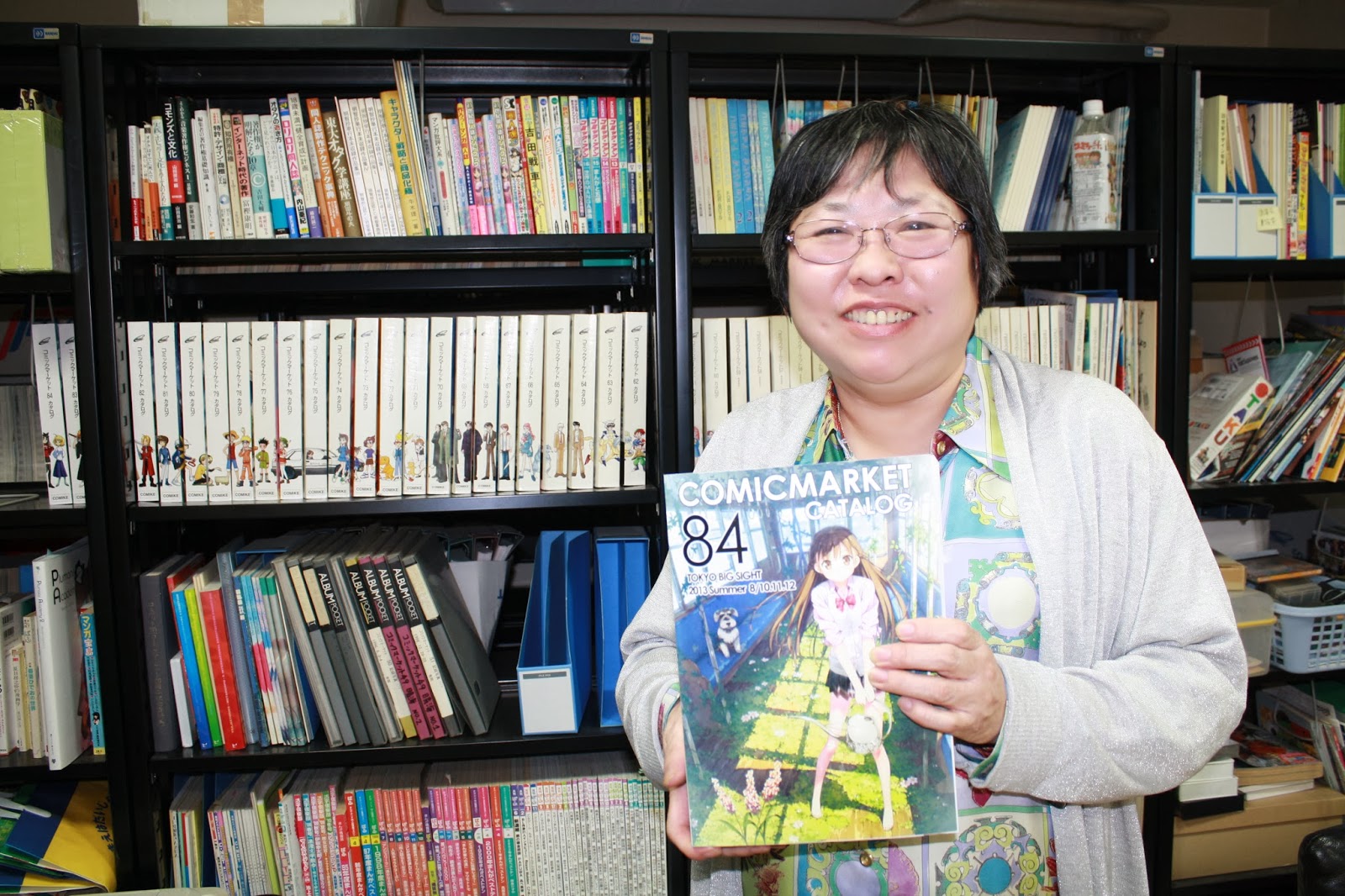

It’s essentially a massive convention, where ‘Dojinshi’ – self published writers and developers of Manga and Games – converge to sell their wares over three days. It’s a great opportunity for people with great ideas and talent to get their products out there – without having to rely on traditional paths into stores.
Many artists and developers can be very successful by taking this route – and there are actually many stores in Japan now dedicated to selling doujin products, and many of the most prolific and talented doujin circles produce Manga and Games that can rival commercial products in terms of quality and production values.
The last Comiket was held back in August of this year – if you want to get an idea of the kinds of games that were on show last time around.
The Comiket was held from the 29th to the 31st of December, so expect we will add more articles about this event soon!
Wednesday, December 18, 2013
Hikikomori: Why are so many Japanese men refusing to leave their rooms?
The hikikomori is considered a uniquely Japanese phenomenon. The hikikomori is typically a male (80% are male), teenaged to 30 years old, who has quit school, has no technical skills, and is unemployed, living in his room in his parents' house, never coming out, taking meals left at his door by his parents, passing the day reading, websurfing, viewing television, idling.
Hikikomori are not strictly hermits (who have a strong psychological or intellectual motive for solitude) and are more properly recluses. But the youth of the hikikomori, their radical withdrawal, and their dependence on the tolerance of parents -- especially the mother -- is considered unique to Japan. A related term or acronymn speciifically referring to the hikkikomori's social status (but including non-hikikomori as well) is NEET, meaining young people "Not in Education, Employment, or Training."
Michael Zielenziger notes in his book Shutting Out the Sun that [Hikikomori] cannot be diagnosed as schizophrenics or mental defectives. They are not depressives or psychotics; nor are they classic agoraphobics, who fear public places but welcome friends in their own homes.

Richard Lloyd Parry adds that neither is it the same as what in Japan is called "school refusal", although inevitably sufferers from hikikomori abandon their educations. Some are teenagers, but most are in their twenties or older.
The Japanese Ministry of Health, Labor and Welfare, which long ignored the problem, in 2003 defined hikikomori as avoiding social participation, including avoiding school attendance, compulsory education, entering the workforce -- including part-time jobs -- and associating with somebody outside the home; generally remaining at home for six months or more.

The Ministry also maintains that although as a general rule we define hikikomori as nonpsychotic phenomenon ... it is not uncommon that hikikomori includes schizophrenia before a definite diagnosis is made.
But according to the American Psychiatric Association's standard Diagnostic and Statistical Manual of Mental Disorders (DSM4), there is no known psychiatric ailment from which hikikomori suffer. Other observers have argued for symptoms of Asperger's and for what the DSM4 calls "social avoidance disorder," but there is no clear evidence. Zielenziger also suggests post-traumatic stress disorder (PTSD), which further identifies the key element within Japanese opinion, that hikikomori are suffering not a psychiatric but a social disorder.
Modern Japanese Society
To argue that social conditions are a chief source of a psychological conditions in specifically traumatized individuals is not favored by modern medicine or science. (A valiant exception is the physician Gabor Mate, M.D.). Yet this thesis is familiar to sociologists. Examining recent Japanese societal change provides a context for understanding the hikikikomori experience as a result of a long historical process.
Japan was always an insular nation until in 1853 United States gunboats under Admiral William Perry "opened" the country to Western domination. Japan was forced into economic dependence and regime change. With establishment of the Meiji government in 1868, Japan set out to centralize the imperial government and build a strong military in response to Western humiliations it had suffered, a fate paralleling recent European control of China.
Religious, cultural, and technological change overthrew Japan's semi-feudal ethics and culture. Militarism and rapid social and economic displacement grew, culminating in imperial wars (against Russia, Korea and China) and, eventually, World War II.
The humiliating defeat of Japan in World War II was compounded by subsequent U.S. occupation and thorough-going dismantling of Japanese institutions. Japan's elites effectively scorned the vestiges of a traditional agrarian economy and its social values to embrace not only industrialization (already dominant since the Meiji) but specifically, capitalism and globalization.
Post-World War II children were shunted into a high-stress school system, and the populace into factories and bureaucracies. Japan suffered speed, noise, urbanization, population shifts, and characteristic family breakdown from extended ie or stem structure families to Western-styled nuclear family as the defaul social unit. Suburban sprawl and ubiquitous technology became the norm in the crowding islands of Japan. The culture feverishly attempted to redress humiliation while technocrats exploited the Japanese character of cooperative stoicism.
In 1980's, the feverish economic bubble burst. But there could be no return to the past. Coincidentally, the hikkikomori phenomenon begins to emerge at this time, accelerating in the 1990's.
All observers have noted the relentless pace of schooling in Japan, rigorous entrance exams beginning before elementary school, high expectations of financial and career success placed on children (especially males) beginning in elementary school, career tracking of youth as early as junior high school/middle school for university versus technical training, 18-hour classroom and study days up to seven days a week, plus bullying, peer pressure, conformity, and burn-out. Maggie Jones notes: "As the Japanese saying goes, 'The nail that sticks out gets hammered in.'"
As the disparity between parents and children widens, so does the enormous disparity between the myth of hard work for success and the dismal economic and social reality of post-boom Japan.
If men, especially, were driven by a "manic defense" in striving for psychological redress after World War II, then post-boom Japan accelerated the relentless pace. For males especially, burning out by high school means no academic or social future.
The dilemma of the hikkokomori is the initial experience of alienation followed by the psychological but also practical inability to reenter society. Zielenziger quotes one mother of a hikikomori as saying:
Hikikomori value the intangibles ... but cannot speak out because there is no place in Japanese society that allows them to. ... A person who challenges, or makes a mistake, or thinks for himself, either leaves Japan or becomes a hikikomori.
One articulate male hikikomori blogger writes that he is aging, that he knows his parents will pass away some day, that he should work as soon as possible. "I know," he admits. "But I'm not able to overcome my Hikikomori."
Conclusion
Hikikomori is in part a unique social and cultural circumstance of Japanese society, but no observer has perceived hikikomori as the transformation of a long history of eremitism characteristic of agraian, semi-feudal Japan -- and the apparent disfiguration of eremitism in hikkikomori. Granted that the psychology of modern society will not preserve this continuity. It is not difficult to imagine the modern young hikkikomori as the hermits, wanderers, and monks of a bygone era. As the mother quoted by Zielenziger noted, hikkokomori simply do not fit in the modern age, but cannot go back to the past either.
The great irony in hikikomori lost to Western observers is the theme of solitude and isolation in Japanese history, culture, and lore. The ancient Shinto creation myth describes the female deity Amaterasu lost in isolation in the emblematic world of the dead after failing to create a proper life for herself and her mate. She is forever destined to hide her disfigurement. This Japanese archetype culminates in the story of the contemporary Japanese Princess Masako (born in 1963), who lives in seclusion, said to suffer depression but, perhaps, suffering a too-realistic view of her world.
And now, the fate of the Japanese people so historically beset by disaster and tragedy, culminates in the unspoken probability of Japan's destruction by nuclear radiation and the ironic disdain of the West after centuries of hostile attention and exploitation, an entire nation ruefully represented in the hikikomori.
Wednesday, December 11, 2013
Christmas in Japan
Christmas is not widely celebrated in Japan as not many people there are Christians. However, several customs have come to Japan from the USA such as sending and receiving Christmas Cards and Presents.

In Japan, Christmas in known as more of a time to spread happiness rather than a religious celebration. Christmas eve is often celebrated more than Christmas Day. Christmas eve is thought of as a romantic day, in which couples spend together and exchange presents. In many ways it resembles Valentine's Day celebrations in the UK and the USA. Young couples like to go for walks to look at the Christmas lights and have a romantic meal in a restaurant - booking a table on Christmas Eve can be very difficult as it's so popular!
Christmas is not a national holiday in Japan, so schools and businesses are normally open on December 25th.
In Japanese Happy/Merry Christmas is 'Meri Kurisumasu'. And it's written in the two Japanese scripts like this; Hiragana: めりーくりすます; Katakana: メリークリスマス. Happy/Merry Christmas in lots more languages.
Parties are often held for children, with games and dancing. Japanese Christmas Cake is a sponge cake decorated with trees, flowers and a figure of Santa Claus.
In Japan Santa is known as サンタさん、サンタクロース santa-san (Mr Santa). Another Japanese gift bringer is Hoteiosho, a Japanese god of good fortune from Buddhism and not really related to Christmas.

Fried chicken is often eaten on Christmas day. It is the busiest time of year for restaurants such as KFC and people can place orders at their local fast food restaurant in advance! The traditional Japanese christmas food is christmas cake, but it's not a rich fruit cake, but is usually a sponge cake decorated with strawberries and whipped cream.
The Japanese New Year (called 'o shogatsu') is more like a traditional Western Christmas. New year is the period where families get together, have a special meal, pray and send greetings cards. New year is celebrated over five days from December 31st to January 4th and is a very busy time.
Friday, December 6, 2013
Japanese Clothing: YUKATA
The Yukata is a casual light cotton kimono for wearing in summer. Yukatas normally have very brightly coloured designs on them. Today thesekimonos are mainly worn to the traditional Bon-Odori and summer festivals. The relative simply design of Yukata means Japanese women can, with some practice, put thiskimono on unassisted.

The name yukata comes from the word -yu- (bath) and -katabira- (under clothing). In the Heian era (794-1185), court nobles wore linen "yukata" which were draped loosely after taking a bath. The yukata was later also worn by Japanese warriors and by the Edo era (1600-1868), it was widely worn by the public when public bath became a popular recreation in Japan.
Today, the yukata is widely worn as a casual wear in summer, as well as in festivals. Further, the yukata is also widely worn in "ryokan" (traditional Japanese inn). The yukata is loved for its lightweight cotton material. Fabric designs vary from the traditional plain cross hatch pattern to the more colourful designs. A cotton sash is usually worn with the yukata for casual daily or nightly wear. In attending festivals and public occasions, the yukata is worn with a wider belt, which can be simply wrapped around the waist and tucked in at the end. For a more formal appearance, the yukata is worn with an obi belt, along with a matching geta (wooden sandals) and purse to complete the attire.
Today, the yukata is widely worn as a casual wear in summer, as well as in festivals. Further, the yukata is also widely worn in "ryokan" (traditional Japanese inn). The yukata is loved for its lightweight cotton material. Fabric designs vary from the traditional plain cross hatch pattern to the more colourful designs. A cotton sash is usually worn with the yukata for casual daily or nightly wear. In attending festivals and public occasions, the yukata is worn with a wider belt, which can be simply wrapped around the waist and tucked in at the end. For a more formal appearance, the yukata is worn with an obi belt, along with a matching geta (wooden sandals) and purse to complete the attire.

Japanese girls and young Japanese women both here in Australia and in Japan enjoy the opportunity to dress in their Yukatas. Today there are not as many suitable chances to wear this colourful traditional Japanese outfit.

The name yukata comes from the word -yu- (bath) and -katabira- (under clothing). In the Heian era (794-1185), court nobles wore linen "yukata" which were draped loosely after taking a bath. The yukata was later also worn by Japanese warriors and by the Edo era (1600-1868), it was widely worn by the public when public bath became a popular recreation in Japan.
Today, the yukata is widely worn as a casual wear in summer, as well as in festivals. Further, the yukata is also widely worn in "ryokan" (traditional Japanese inn). The yukata is loved for its lightweight cotton material. Fabric designs vary from the traditional plain cross hatch pattern to the more colourful designs. A cotton sash is usually worn with the yukata for casual daily or nightly wear. In attending festivals and public occasions, the yukata is worn with a wider belt, which can be simply wrapped around the waist and tucked in at the end. For a more formal appearance, the yukata is worn with an obi belt, along with a matching geta (wooden sandals) and purse to complete the attire.
Today, the yukata is widely worn as a casual wear in summer, as well as in festivals. Further, the yukata is also widely worn in "ryokan" (traditional Japanese inn). The yukata is loved for its lightweight cotton material. Fabric designs vary from the traditional plain cross hatch pattern to the more colourful designs. A cotton sash is usually worn with the yukata for casual daily or nightly wear. In attending festivals and public occasions, the yukata is worn with a wider belt, which can be simply wrapped around the waist and tucked in at the end. For a more formal appearance, the yukata is worn with an obi belt, along with a matching geta (wooden sandals) and purse to complete the attire.

Japanese girls and young Japanese women both here in Australia and in Japan enjoy the opportunity to dress in their Yukatas. Today there are not as many suitable chances to wear this colourful traditional Japanese outfit.
Monday, December 2, 2013
How to: Visit a Sento (Japanese Public Bath House)
At the end of a long day, a hot sento public bath can wash away your troubles, and that’s a pleasure worth sharing. Sento are a fading tradition but still dotted throughout Japanese suburbs, and even central Tokyo has a few ornate temple-like baths left. You’re likely to be the only non-Japanese at a sento, so to avoid standing naked and tongue-tied, find out what to bring, what to do there and which bath is electrified. Yes, electrified.
1. Pack your kit
You’re going to get naked. Completely. So the most essential item is a small towel to cover your privates. Everything else is optional. Most sento don’t provide soap and shampoo (although they sell them) so take these if you wish, along with a loofah, toothbrush and other toiletries. Don’t bring valuables, and expect some stares if you're heavily tattooed - many Japanese people still associate this with the yakuza, although it's highly unlikely you'll be mistaken for one.
2. Come to your sento
Sento range from small suburban baths to ‘super sento’ in the centre of Tokyo. When you enter, leave your shoes in a shoe locker. Pay the entrance fee (around ¥450) to either an old lady at a counter or at a vending machine for tokens.
3. Undress to impress
Men and women bathe separately, so look for the characters 男 for male and 女 for female to avoid embarrassment. Once through, you’ll find a change room with lockers for your clothes and belongings. After undressing, all you should be wearing is that small towel and a locker bracelet. Cross through the sliding doors with your toiletries to the tranquil baths.
4. Brush up on etiquette
The baths are a large, tiled space with deep rectangles of water and wafting steam. Speaking is kept to hushed, library levels. You’ll find open shower cubicles or basins lining the walls. Sit at a stool facing the wall and use the small bucket provided to wash yourself with warm water (soap optional). The baths are not for washing yourself in, so make sure you are sparkling clean before getting in. And find the toilets if you need to go! Hang up your towel and scrub yourself head to toe of any dirt, soap and shampoo.
5. The right bath
Enter a bath naked, or use your towel to tiptoe over if you are shy, but remember: the only thing that goes into a bath is your nude clean body. Choose your pool of water carefully. Maybe not the one with the lightning bolt symbol above it, unless a mild electric shock thrills you - the theory is that electricity contracts the muscles, thus relaxing you when you get out. Be careful also of the scalding bath - you’ll know it the moment you dip your pinkie in. Start instead with the hot bath, entering slowly to test the temperature. If there are other bathers, there’s no need to say a word or make eye contact, just enjoy. Relax, leave behind the world outside hurtling at bullet speed, and reflect upon the mural of ancient Mount Fuji.
6. Double dip
Once you have soaked enough in the hot bath, try the icy cold bath to snap you out of drowsiness. Some sento also have a mineral bath with rich, cola-black water.
Now step out and repeat the process, washing yourself again on a stool, then sinking into another bath - this is the centuries-old ritual of sento.
7. Lights out
To leave, go Japanese style - don’t wash off the minerals of your last dip, get changed into your pyjamas, try a milk from a vending machine, and stroll back to your bed, totally at ease with the world and ready for a deep sleep.
Subscribe to:
Posts (Atom)